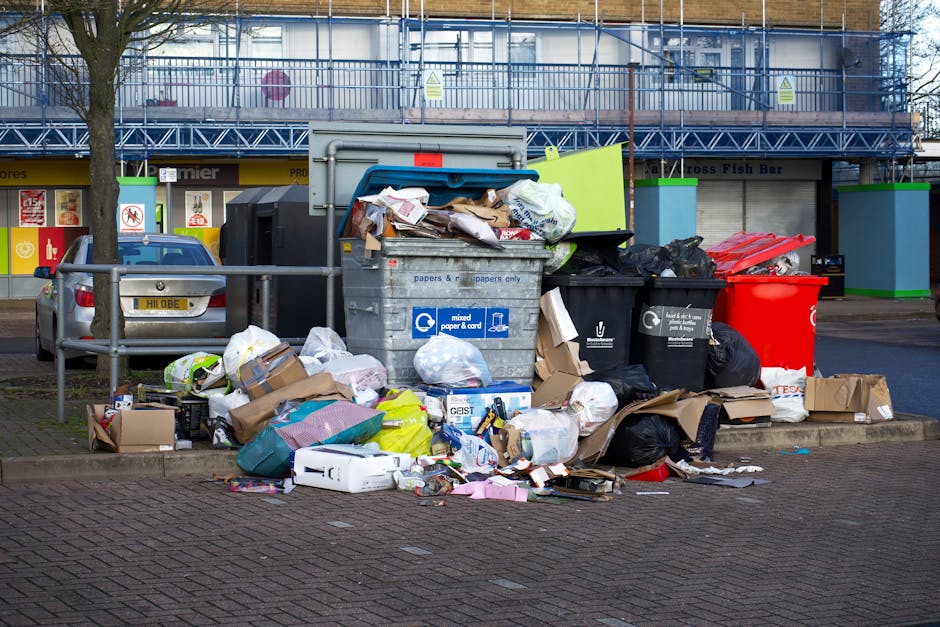
Rubbish removal options for Station Road residents North Watford
If you live on or near Station Road in North Watford, rubbish has a way of building up fast. A broken wardrobe in the hallway, garden cuttings after a weekend tidy-up, or a flat moving out at the end of the month - it all piles up before you know it. The good news is that there are several rubbish removal options for Station Road residents North Watford, and the right choice depends on how much waste you have, how quickly it needs to go, and how much lifting you want to do yourself.
This guide breaks down the practical choices in plain English. You will see when a full clearance service makes sense, when smaller waste collections are enough, and how to avoid the usual headaches around parking, access, sorting, and disposal. Let's face it, nobody wants a heap of bags sitting by the front door for another three days.
For a broader look at what a professional service can cover, you may also find waste removal and home clearance useful if your job is more than a simple bin bag pickup.
Table of Contents
- Why rubbish removal matters for Station Road residents
- How rubbish removal works in practice
- Key benefits and practical advantages
- Who this is for and when it makes sense
- Step-by-step guidance
- Expert tips for better results
- Common mistakes to avoid
- Tools, resources and recommendations
- Law, compliance, standards, or best practice
- Options, methods, or comparison table
- Case study or real-world example
- Practical checklist
- Conclusion
- Frequently asked questions
Why rubbish removal options for Station Road residents North Watford matters
Station Road has the kind of everyday traffic and mixed housing pattern that makes waste collection a little more complicated than people expect. You may have a flat with limited access, a terraced property with tight frontage, or a busy household where bulky items appear out of nowhere. In those situations, the "just put it out later" approach often turns into clutter, complaints, or missed timing.
Choosing the right rubbish removal option matters for three reasons. First, it keeps your home usable. Second, it reduces the chance of waste sitting around attracting damp, smells, or pests. Third, it helps you deal with items properly, rather than leaving you guessing what to do with broken furniture, renovation offcuts, or mixed junk.
There is also the neighbour factor. On a road like Station Road, where access and sightlines can matter, stacked bags or awkwardly placed furniture can get in the way quickly. Even a short delay can feel bigger than it is. If you've ever tried to squeeze a wardrobe past a narrow hall while someone is answering the door, you know the sort of thing.
Used well, rubbish removal is not just a clean-up job. It is a practical way to reset a space.
Expert summary: The best rubbish removal option is usually the one that matches your volume of waste, the type of material you have, and how much time or lifting you want to handle yourself.
How rubbish removal works in practice
Most rubbish removal services follow a straightforward process, although the details vary. You describe what needs clearing, share a rough idea of quantity, and get a quote or estimate. Then a team arrives, loads the waste, and takes it away for sorting, recycling, or disposal. Simple on paper. Real life, a bit messier.
For Station Road residents, access is often the key detail. Can a vehicle stop close enough? Is there a parking restriction? Are items on the first floor, in a loft, or behind a side gate? Those small logistics can affect timing and cost more than people expect.
Here is the usual flow:
- You identify the rubbish type and quantity.
- You decide whether you need one-off removal, a partial clearance, or a full property clearance.
- You request a price based on photos, a visit, or a description.
- The team arrives and loads the waste.
- Items are separated where possible for reuse, recycling, or disposal.
- You are left with a cleared space and less to worry about.
Sometimes people think all rubbish removal is the same. It is not. A sofa, a mattress, garden waste, builder's rubble, and a loft full of mixed household items each bring different handling needs. That is why a good provider will ask questions before quoting. It is not being fussy; it is how they avoid surprises later.
If your job includes larger pieces of furniture, furniture clearance and furniture disposal can be especially relevant, particularly where lifting and transport are the main challenge.
Key benefits and practical advantages
The best rubbish removal option is not always the cheapest on paper. It is the one that saves time, cuts hassle, and reduces the risk of doing the job twice. That may sound obvious, but people still underestimate the hidden cost of renting a van, lifting heavy items, or making several trips to a disposal point.
Here are the main advantages residents usually notice:
- Speed: A decent clearance team can remove a lot in one visit.
- Less manual work: Useful if you have bulky furniture, awkward stairs, or a lot of bags.
- Better organisation: Mixed waste can be sorted instead of dumped into one category.
- Convenience: Handy when time is tight, especially during a move or renovation.
- Cleaner finish: You are not left staring at the pile all weekend.
- Safer handling: Heavy or sharp items are moved by people used to handling them.
There is also a mental benefit that people often overlook. Clearing rubbish can make a property feel bigger, calmer, and more manageable almost immediately. You notice it when the hallway opens up, or when the garage door finally shuts without a fight. Small thing, big relief.
For larger jobs in and around the home, house clearance and loft clearance are worth considering if the waste is mixed with unwanted belongings rather than just loose rubbish.
Who this is for and when it makes sense
Rubbish removal is not only for people facing a full house clear-out. In fact, many Station Road residents use it for smaller, very ordinary situations. A few bags become a couple of bags, then a broken desk, then some flat-pack packaging, and suddenly you are making a proper job of it.
This option makes sense if you are:
- moving home and do not want to take everything with you
- clearing a rental flat between tenants
- refreshing a bedroom, kitchen, loft, or garage
- dealing with bulky household items that will not fit in standard bins
- cleaning after a DIY project or minor renovation
- tidying a garden after pruning, cutting, or landscaping
- helping a relative downsize and sort through belongings
It also makes sense when convenience matters more than doing it yourself. Maybe you have the time, but not the van. Maybe you have the van, but not the back for lifting a wardrobe down the stairs. Be honest about that part. Your back will thank you later.
If the job is more outside-focused, garden clearance can be a better fit. If it involves old boxes, clutter, and stored items in a tight space, garage clearance may be the more efficient route.
Step-by-step guidance
If you want to choose the right rubbish removal option without wasting money, follow a simple step-by-step approach. Nothing flashy. Just sensible planning.
1. Identify what you actually need removed
Start with a basic inventory. Separate bags, furniture, appliances, garden waste, building waste, and general household clutter. Mixed loads can still be cleared, but knowing what you have helps prevent underestimating the job.
2. Check access and timing
Think about where the waste is stored and how easy it will be to remove. Is there parking close by? Are there stairs? Is the item in a loft or basement? A minute of thinking now can save a lot of awkwardness on the day.
3. Decide whether you need a small collection or a full clearance
Small jobs suit targeted rubbish removal. Bigger, messier jobs are often better handled as a broader clearance. If a room needs to be reset from top to bottom, a full-service option can actually be more economical than piecemeal removals.
4. Ask how the waste will be handled
A responsible provider should be able to explain how items are sorted, recycled, or disposed of. You do not need a lecture. Just enough clarity to know the process is sensible and lawful.
5. Compare cost, convenience, and speed
Do not focus on price alone. A slightly higher quote may be better if it includes lifting, loading, and proper handling of awkward items. On the other hand, if you already have items bagged and ready, a smaller waste removal service may be all you need.
6. Book for a realistic time slot
Try to plan around traffic, parking availability, and your own schedule. A morning slot can be useful if you want the rest of the day back. An afternoon slot may work better if you need time to finish sorting. There is no magic answer, just what fits your day.
Expert tips for better results
After handling enough clearances, a few patterns become obvious. The people who get the best result usually do a little prep before anyone arrives. Nothing complicated. Just small, practical steps.
- Sort before the team arrives: Separate obvious recyclables, keep donations aside if appropriate, and group similar items together.
- Photograph the load: Photos help with quicker quotes and reduce misunderstandings.
- Make access easy: Clear a route through the hallway, move cars if needed, and unlock gates in advance.
- Label tricky items: If something needs special handling, say so clearly.
- Keep essentials back: It sounds obvious, but people sometimes pack away important documents, tools, or chargers by accident. Happens all the time.
One small trick that helps is to create a "definitely keep" pile before anything else. Then create "remove" and "not sure" piles. That little split can stop a job from becoming a half-day debate over old cables, broken lamps, and a box of mystery kitchen bits. We have all seen that box.
If you are dealing with a mixed set of items from a renovation, builders waste clearance is the better fit for rubble, packaging, plasterboard, timber offcuts, and similar debris. It is often a poor cousin of home clear-outs, but it matters just as much.
Common mistakes to avoid
The most common mistakes are not dramatic. They are the quiet, annoying ones that cost time or money later.
- Underestimating volume: A pile that looks small on the floor can fill a vehicle fast.
- Forgetting access issues: Narrow entrances, tight stairwells, and parking limits can change everything.
- Mixing hazardous items with general waste: Paints, chemicals, and certain electrical items often need separate handling.
- Assuming every service covers the same things: Some jobs are straightforward; others need specialist handling.
- Leaving booking too late: If you need a quick turnaround, waiting until the last minute can narrow your options.
- Choosing only by the cheapest quote: The low number can look great until you realise loading, lifting, or disposal details were not included.
A lot of people also forget to ask what happens after collection. Do they sort items properly? Do they recycle where possible? Is the provider insured? These are fair questions. Not awkward ones.
And yes, one more thing: do not leave a pile of "maybe later" items in the corner for six months. It becomes part of the furniture. A very annoying piece of furniture.
Tools, resources and recommendations
You do not need fancy equipment to prepare for rubbish removal, but a few simple tools make the process smoother.
- Heavy-duty bin bags: Better for mixed lightweight waste and soft clutter.
- Moving gloves: Useful for lifting, sharp edges, and dusty items.
- Tape and labels: Good for marking keep, remove, recycle, or fragile items.
- Photo app on your phone: Helpful for quotes and planning.
- Furniture sliders or a trolley: Handy if you are shifting items short distances before collection.
If you want to understand how a provider handles trust, safety, and service standards, it is sensible to read company policy pages before booking. The following pages can help you assess the kind of business practices behind the service: insurance and safety, health and safety policy, and recycling and sustainability.
If you need clarity on costs, the most practical place to start is pricing and quotes. That is usually where you can compare the sort of service you need against the level of work involved.
Law, compliance, standards, or best practice
With rubbish removal, compliance is mostly about common-sense professionalism: handling waste responsibly, avoiding fly-tipping, and making sure items are taken to the right place. You do not need to become an expert in waste legislation to choose a good service, but it helps to know what good practice looks like.
In the UK, household and commercial waste must be managed properly, and you should be cautious about handing over waste to anyone who cannot explain where it goes. If a quote is suspiciously cheap, ask why. A proper service should be willing to talk plainly about sorting, recycling, loading, and disposal. If they cannot, that is a red flag. Simple as that.
It is also worth checking whether a provider is insured and whether staff follow basic lifting and loading safety. That matters especially in homes with stairs, narrow halls, or fragile fixtures. One chipped wall or one dropped item can turn a bargain into a headache.
Best practice from a customer point of view is straightforward:
- describe the waste honestly
- separate anything hazardous or unusual
- ask how recycling is handled
- confirm what the quote covers
- keep access safe and clear
If you are using a service for a business address or mixed-use property, business waste removal and office clearance may be more relevant than a household-only option.
Options, methods, or comparison table
Here is a simple comparison of the main rubbish removal options that Station Road residents typically consider.
| Option | Best for | Pros | Things to watch |
|---|---|---|---|
| Self-removal | Small amounts of bagged waste | Can be cheaper if you already have transport | Time, lifting, fuel, and disposal rules |
| Skip hire | Longer projects and larger volumes | Useful if waste builds up over several days | Space, permits, loading by yourself |
| Man-and-van style rubbish removal | Bulky mixed waste and one-off clearances | Quick, flexible, less lifting for you | Access and accurate quoting matter |
| Full property clearance | Whole homes, estates, or major downsizing | Best when there is a lot of sorting and removal | Needs more planning and clear instructions |
| Specialist clearance | Builders waste, garden waste, furniture, or loft jobs | More tailored handling | May not suit mixed rubbish from several sources |
The right answer depends on the shape of the job. A single sofa is one thing. A whole garage of mixed junk is another. A room full of old belongings is another again. There is no one-size-fits-all, no matter how neat the brochure looks.
Case study or real-world example
A fairly typical Station Road scenario goes like this. A resident is moving out of a two-bedroom flat and discovers, at the last minute, that the spare room contains an old mattress, a broken chest of drawers, three bags of mixed clutter, and several boxes of packaging from flat-pack furniture. The bins are already full. The move-out day is close. Stress levels, predictably, are rising.
Rather than trying to do five separate trips in a hatchback, the resident books a rubbish removal service that can handle mixed household waste. Photos are sent beforehand, access is checked, and the team arrives with enough space to take everything in one go. The mattress goes, the broken drawers go, the cardboard is sorted where possible, and the flat is left ready for final cleaning.
What made the difference was not magic. It was matching the service to the problem. If the resident had only needed a few bags, a smaller waste collection would have been enough. But with bulky items, mixed clutter, and a time pressure, a single coordinated removal was the better choice. Much less running around. Much less muttering under the breath.
That is the pattern you see most often. The best option is usually the one that reduces steps, not the one that looks cleverest on paper.
Practical checklist
Use this checklist before booking rubbish removal on or near Station Road:
- List the items you want removed.
- Separate general waste from anything hazardous or unusual.
- Take a few clear photos.
- Check access, stairs, and parking.
- Decide whether it is a small pickup, partial clearance, or full clearance.
- Ask what the quote includes.
- Confirm whether lifting, loading, and disposal are covered.
- Check how the provider approaches recycling and sorting.
- Prepare a clear path to the waste.
- Set aside anything you do not want removed.
A little preparation goes a long way. Honestly, about ten minutes of planning can save an hour of faffing later.
Conclusion
For Station Road residents in North Watford, rubbish removal is really about choosing the simplest route to a clear space. Sometimes that means a quick waste collection. Sometimes it means furniture removal, garden clearance, or a fuller house clearance. The best option depends on volume, access, timing, and how much work you want to do yourself.
If you focus on practical details - what needs removing, how it gets out, and where it goes - the decision becomes much easier. That is the real win here. Less clutter, fewer surprises, and a home that feels usable again.
If you are comparing options now, start with the size of the job and the type of waste, then work backwards from there. It keeps things simple, which is usually where the good decisions live.
Get a free quote today and see how much you can save.
Frequently Asked Questions
What are the main rubbish removal options for Station Road residents North Watford?
The main options are self-removal, skip hire, man-and-van rubbish removal, full property clearance, and specialist clearance for things like garden waste or builders debris. The right choice depends on volume, access, and how quickly you need the waste gone.
Is rubbish removal better than hiring a skip?
It can be, especially if you want less lifting and less time managing the waste yourself. Skips work well for longer DIY jobs, but rubbish removal is often easier for mixed loads, bulky items, or properties with tight access.
How do I know whether I need a full clearance or just a small collection?
If you only have a few bags or a single item, a small collection may be enough. If you are clearing several rooms, a loft, a garage, or a property after a move, full clearance is usually the better fit.
Can rubbish removal handle furniture and bulky items?
Yes, in many cases it can. Sofas, wardrobes, beds, and similar items are commonly removed as part of furniture clearance or a wider house clearance. It is sensible to mention bulky items when asking for a quote.
What should I do before the collection team arrives?
Clear a route, separate keep and remove piles, take photos if useful, and make sure access is straightforward. If parking is tight on Station Road, it helps to plan that in advance too.
How is rubbish usually disposed of after collection?
Responsible providers sort items for recycling, reuse, or disposal depending on the material. Mixed waste should not simply be dumped without sorting, and you can ask how the company handles this before booking.
Are there items that need special handling?
Yes. Hazardous materials, certain electrical items, paints, chemicals, and some construction waste may need separate treatment. If you are unsure, say so early rather than leaving it to chance.
How can I keep rubbish removal costs down?
Be accurate about what you have, separate easy-to-handle items, and make access as simple as possible. Honest information helps avoid revised quotes and extra time on site.
Is a rubbish removal service suitable for flats on Station Road?
Yes, very often. Flats can be especially well suited to rubbish removal because the service reduces the need for repeated trips, heavy lifting, and awkward transport in and out of the building.
What if I only need garden or garage waste removed?
Then a more specific service may make sense. Garden clearance and garage clearance are usually more efficient when the waste is concentrated in one area rather than spread across the whole property.
Do I need to worry about compliance or disposal standards?
You do not need to know every detail, but you should make sure the provider handles waste responsibly, is insured, and can explain how rubbish will be processed. That is a fair baseline for good practice.
What is the fastest way to get started?
Take a few photos, list the items, and decide whether your job is a small collection or a larger clearance. That is usually enough to get a clear and useful quote without lots of back and forth.